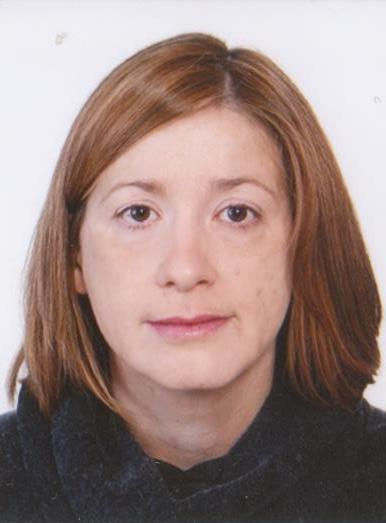
Marta Mileusnić
Marta Mileusnić is a Professor at the University of Zagreb – Faculty of Mining, Geology, and Petroleum Engineering, where she has worked for 25 years. Marta has taught a wide range of courses at undergraduate, graduate, and doctoral levels.
Her research interests cover environmental and exploration geochemistry, clay mineralogy, geoarchaeology, and mineral resource value chains. She has led and participated in numerous international projects, including EU-funded and EIT KIC Raw Material initiatives. Marta has authored 22 scientific papers and numerous conference contributions. She has been a guest professor and researcher at institutions across Europe, North America, and Africa.
Marta has played a significant role in developing educational programs and standards, contributing to the advancement of academic and professional qualifications in her field. She is a member of Sectoral Council III for Mining, Geology, and Chemical Technology, which plays a crucial role in shaping the Croatian Qualifications Framework and influencing economic development in Croatia. Marta is actively involved in several professional organizations, including the National Commission for UNESCO Global Geoparks and the Croatian Geological Society, where she serves as a Vice President.
Outside of her professional life, Marta is passionate about traveling and discovering new cultures, while also enjoying nature through hiking and long walks, as well as reading and watching movies.
In the frame of the PRO-SLO PhD School, she is responsible for overseeing the design of the school in line with EIT educational standards, as well as organizing the school in 2025 and 2026.
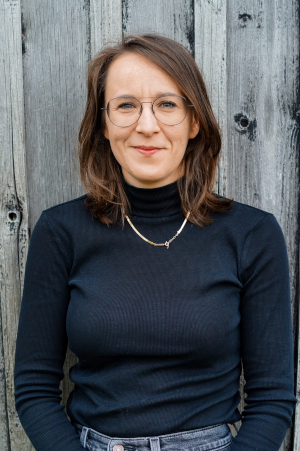
Theresa Wand
Theresa Wand is Deputy Director of the Graduate and Research Academy at TU Bergakademie Freiberg.
After studying business administration, she completed her doctorate at the TU Bergakademie Freiberg on conflict management and conflict management systems in companies and trained as a certified mediator during this time.
The focus of her work is the interdisciplinary and systematic qualification and support of young academics from doctoral students to postdocs and tenure-track professors. In this context, she has many years of teaching and workshop experience in the areas of communication and conflict management, university didactics and gender equality and emphasizes hands-on methods, collegial exchange and reflection in her work.
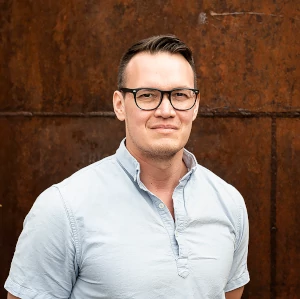
Gregory Poelzer
Gregory Poelzer, Political Science, Luleå University of Technology
Luleå, Sweden (gregory.poelzer@ltu.se, https://orcid.org/0000-0003-1574-3862)
Gregory Poelzer is an Associate Senior Lecturer at Luleå University of Technology. For the past ten years, Poelzer has focused his research on the relationship between mining companies and communities. He has been involved in case studies across Europe and Canada that investigate Social License to Operate and has written on its conceptual development. In addition, his research looks at legitimacy, particularly the procedural and value factors that affect trust. This work includes comparative analysis at the international, national, and local levels – looking at the relationship between government, industry, and society. He has presented his research at multiple international conferences, participated in both academic and industry panels, and research workshops, including a week-long visit to Armenia, hosted by the Swedish Consulate, that included seminars and lectures with company representatives, government officials, and academics on the topic of SLO. He has also had responsibility for delivering lectures for EMerald master's students on company-to-community relations.
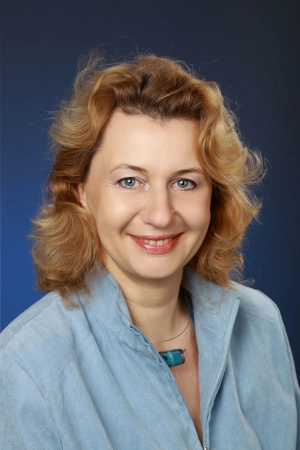
Joanna Kulczycka
Dr hab. Joanna Kulczycka (kulczycka@meeri.pl) is Professor in the Faculty of Management at the AGH University of Science and Technology, Director of the office of The Highway to Technology and Innovation Institute IATI - virtual institute, and President of the Waste Management and Recycling Cluster – Key National Clusters in Poland.
Expertise: raw material management, circular economy, waste management
At AGH she teaches economic, corporate social responsibility, eco-innovation in industry competitive sustainable business, circular economy and other.
Joanna Kulczycka has a Ph.D. in management (1998) from AGH UTS (Cracow), and a D. Sc. degree (habilitation) in economics (commodity science) from Poznań University of Economics. She was the founder of and now heads the Department of Strategic Research at MEERI Polish Academy of Sciences. She is a Professor in the Faculty of Management AGH University of Science and Technology, and is author of over 200 publications. These include the first book on LCA in Polish, the first Polish Minerals Yearbook, and the first book about critical raw materials in Poland, and she is also editor of several books concerning the circular economy in Poland. Her research experience stretches from the economics and management of industrial processes, mainly in the raw materials and recycling sectors, to CSR, to eco-innovation and to the circular economy. Member of the UNEP Resource Panel, the European Circular Economy Stakeholder Platform (2017-2020), EU H2020 SC5 Advisory Group for Societal Challenge 5 'Climate Action, Environment, Resource Efficiency and Raw Materials (2014-2018)’, EU EIT Raw Materials (operational group), and the Committee for the Sustainable Management of Raw Materials of the Polish Academy of Science. She has experience in the management and realisation of EU projects, from 5FP UE, H2020, Interreg, KIC Raw Materials, Era-min and in the organisation of many conferences and workshops.
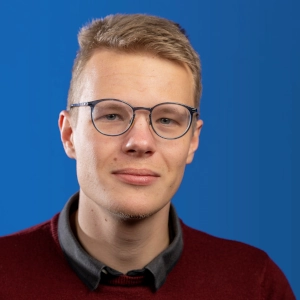
Maximilian Erdmann
Maximilian Erdmann is a research assistant at the chair of behavioral and business ethics at the Technical University Bergakademie Freiberg.
He is a trained and passionate philosopher and economist and teaches courses and seminars in business ethics. His research is dedicated to facilitating the circular economy from a business ethics perspective. In doing so, he focuses on the application and further development of theories of responsibility and on improving the effectiveness of institutions that should incentivize market actors to act sustainably.
Outside of university, he gained experience in sustainability (ESG) and corporate responsibility in the automotive industry and the financial sector.
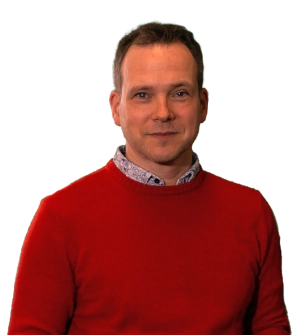
Gari Walkowitz
Gari Walkowitz is a full professor of behavioral and business ethics at the Technical University Bergakademie Freiberg.
His research is dedicated to the design and effectiveness of institutions to promote ethical and sustainable behavior in companies and markets. He works at the interface between behavioral economics, social psychology, and philosophy. The aim of his work is to better understand the interactive influence of organizational framework conditions, incentive systems, situational factors, and personality dispositions on individual and collective decisions in organizations and on markets when dealing with valuable resources.
Gari Walkowitz has already researched and taught at many other universities before his time in Freiberg (e.g., Humboldt-University of Berlin; Bonn University; University of Cologne; Technical University of Munich; RWTH Aachen; Catholic University of Eichstätt-Ingolstadt; Ingolstadt University of Applied Sciences; Mittweida University of Applied Sciences; Sichuan University, Chengdu; Southwest Jiaotong University, Chengdu; Hebrew University of Jerusalem; Al-Quds University, Abu-Dis; Helsinki University; University of Pennsylvania; National Research University Higher School of Economics, Moscow.
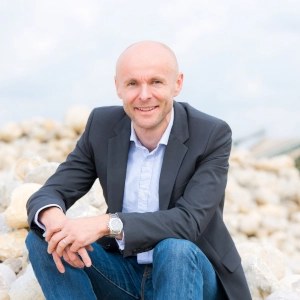
Michael Tost
Michael Tost is the professor for sustainable mining technology at Montanuniversität Leoben, Austria.
Michael has a PhD in mining and an environmental engineering master’s degree from Montanuniversität Leoben and various post-graduate courses at London Business School, UK and AGSM in Sydney, Australia. He is a passionate and motivated sustainable development and mining professional.
Before joining Montanuniversität Leoben, Michael was Head of External Affairs, Europe & North America for Vale, based in Switzerland and Head of Mining and Metals at the World Economic Forum, Switzerland, where he initiated the project “Mining & Metals in a Sustainable World” and was focused on the advancement of responsible mineral development. Before, he was with Rio Tinto, where he worked for over 12 years in various sustainable development and health, safety and environment related roles in Austria, UK and Canada.
Outside work, Michael is very passionate about mountains, endurance sports and nature.
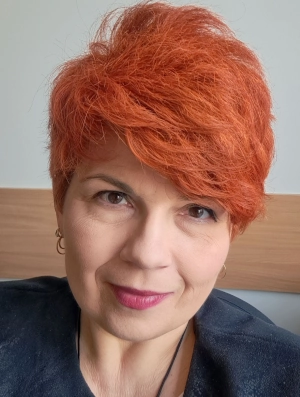
Anita Proszowska
assistant professor in AGH University of Krakow; a professional with more than 20 years of educational and practical experience, skilled in data collection and marketing research; author of over 100 publications (ORCID: 0000-0002-9208-367X). Member of the Polish Scientific Marketing Association; accredited tutoring practitioner; has comprehensive experience in training and teaching; lectured and conducted research in Spain, Finland, Netherlands and Portugal; completed several international teacher training courses for higher education. Her main research interests focus on consumer behaviour, in particular the determinants of pro-environmental behaviour, taking into account cultural differences
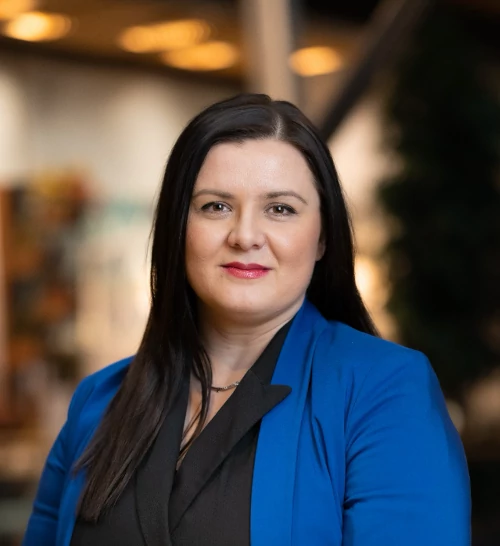
Vildana Mahmutović
Head of Sustainability
Vildana Mahmutović has over 10 years of experience in the fields of environmental protection, sustainability, and ESG standards. She gained her expertise working in the consulting sector with nearly all major industries in Bosnia and Herzegovina, as well as with USAID projects.
Currently, as the Head of Sustainability at Adriatic Metals, she is responsible for the further development and promotion of the company’s sustainability strategy. This includes the Net-Zero strategy, climate, physical, and transition risk management, as well as sustainable community development, core values, and an ESG strategy aimed at enhancing business performance and creating a strong social purpose.
She led the first environmental and social impact assessment for mineral resources in the country, which was published in December 2021 for the Vareš project.
As part of her role in the PRO-SLO doctoral school, she participates in the design, organization, and implementation of the on-site part of the program, including case study development. Her contributions ensure a practical component in the education process, allowing students to apply theoretical knowledge in real-world scenarios. In conclusion, she will act as the industry mentor providing students with „real-life“ case studies and guiding them through its methodology and completion.
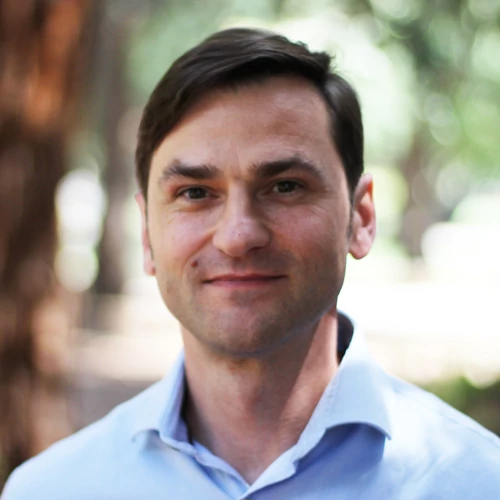
Dr. Denis Kalkofen
Dr. Denis Kalkofen is an Associate Professor at the Institute of Visual Computing at Graz University of Technology, Austria. His research is focused on the development of approaches for authoring and interacting with Mixed Reality assistance, teaching, and training systems, approaches to rendering Mediated Reality environments, approaches to authoring interactive shareable 3D environments, approaches to effectively visualizing information in Mixed Reality environments, and approaches to enhancing the visual perception in immersive 3D displays.. Denis received Dipl.-Ing. (2004) from the University of Magdeburg and Dr. techn. (2009) and Habilitation (2022) from Graz University of Technology. Denis won best paper, best short paper, and honorable mention for best paper awards at several international scientific events, including IEEE ISMAR, 3DUI, EuroVis, KELVAR, BioVis, VRCAI, and IEEE Virtual Reality.
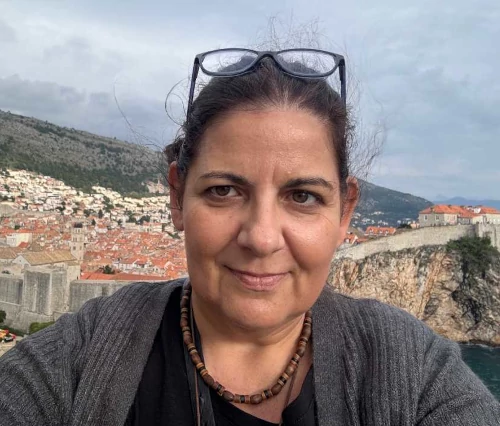
Irene CHRISTODOULOU
Irene CHRISTODOULOU, Mining and Metallurgical Engineer, MEng., MBA
Contact details: School of Mining and Metallurgical Engineering, National Technical University of Athens, Greece, Tel.: +30 210 772 3311, Mob.: +30 6973 370233, email: christod@metal.ntua.gr
- Experienced Metallurgical Engineer [MBA (2004), Meng. in Industrial Metallurgy (1996), BSc. in Mining & Metallurgy (1995)], Expert on Industrial innovation for sustainability, Business development consultant, Senior consultant on environmental (EIA, SEIA) and technical studies
- Skilled in Energy-intensive industries, Innovation management, Industrial clusters, Industrial symbiosis
- Teaching and research associate (from 2007) at the School of Mining and Metallurgical Engineering, NTUA
- Member of the NTUA Team in more than 25 National and EU-funded research projects (1996 to now). From 2021, her activity focuses on education research. She currently (2024) participates in 3 EIT RawMaterials projects (DIM-ESEE 2, RIS-Internship, PRO-SLO) and the Alliance EULiST European Universities Linking Society and Technology.
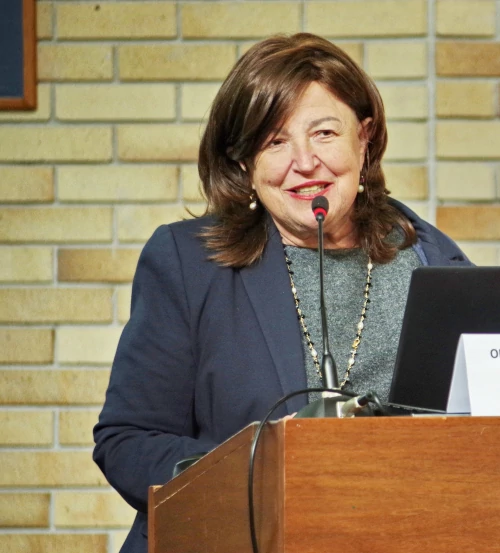
Katerina Adam
Katerina Adam, (katadam@metal.ntua.gr) is a Prof. Emeritus at SMME, NTUA. Studied Mining and Metallurgical Engineering at NTUA and acquired her M.Sc. and Ph.D. as an NSF scholar from the School of Chemical Engineering and Materials Science, University of Minnesota, USA. She joined NTUA as Academic staff in 2007 and before she worked as a Senior Engineer and Manager in Research Institutes, Mining & Metallurgical Industry and Environmental Consultancy firms for the Development and Environmental Management of Greek and International Mining and Industrial Projects.
Her Research interest lies in Project & Environmental Management, Sustainable Development of Natural Resources, Reclamation of old industrial sites, Health and Safety and Engineering Education towards the achievement of SDGs. She acted as the coordinator or senior researcher in more than 56 National, EU and Internationally funded research projects, 13 of them funded by EIT RawMaterials and conducted in the period 2016 to the present , e.g TOP STARS, RESEERVE, Raw Materials Days in Athens, 2020, EnAct SDGs, Coordinator, RM@Schools ESEE, RMs Manager, RIS Education & Entrepreneurship, SISTEM, TRAINESEEv2 completed, and the on going projects DIMESEE -2, RIS Internship, RIS BRIEFCASE, PRO-SLO, SkiComCu. She conducted as an expert on behalf of UNDP mine reclamation studies in the SW Balkans, 2011-2014.
She authored or co-authored 102 scientific articles in peer reviewed journals and conference proceedings, and more than 150 Technical, Feasibility and Environmental Impact Studies.
Katerina Adam is presently the Chair of the EIT Raw Materials Eastern CLC SC, the Education Advisor of the EIT Raw Materials Hub – Regional Center Greece, and the Coordinator of the NTUA Team in the EULiST European University Alliance.
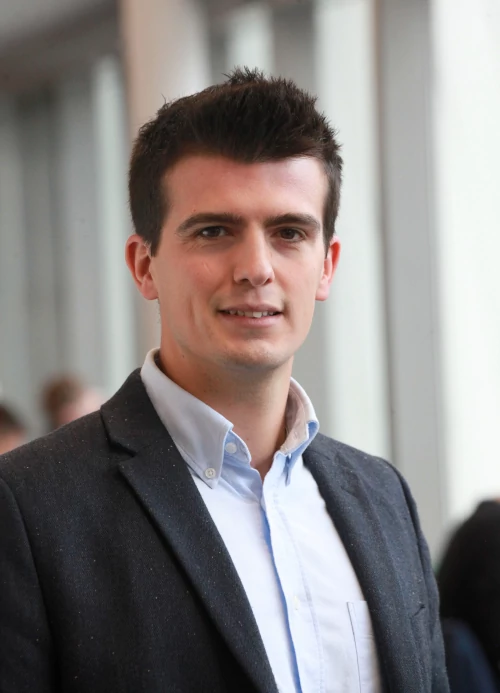
Manuel Labrador Ortega
Manuel Labrador Ortega is the Project Manager for Digital Technology Applications at the Resources Innovation Centre (RIC) of Montanuniversität Leoben. He leads EU-funded interdisciplinary projects, advancing innovation in the raw materials sector by implementing cutting-edge digital solutions and fostering collaboration between academia, industry, and stakeholders.
With over a decade of experience, Manuel has a strong background in engineering and technology. Before joining RIC, he worked in the oil and gas sector at Thonhauser Data Engineering (TDE), where he coordinated real-time operations, developed data-driven innovations, and led client-focused engineering solutions. He holds a master's degree in mining from the Technical University of León, Spain, and completed an Erasmus exchange at Montanuniversität Leoben. Passionate about driving technological transformation, he focuses on integrating digital tools and fostering teamwork to address complex challenges in the raw materials industry.
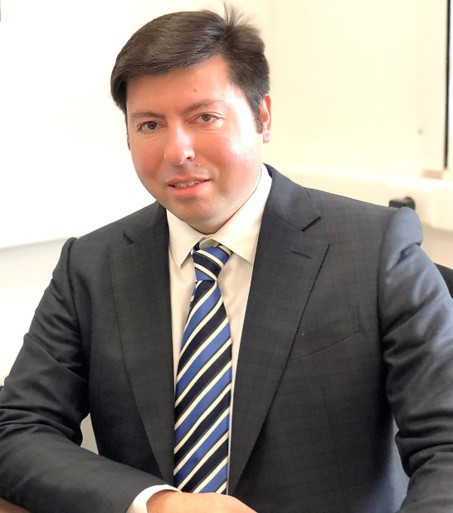
Prof. Dr.-Ing. Spyros PAPAEFTHYMIOU
Prof. Dr.-Ing. Spyros PAPAEFTHYMIOU is a Mining & Metallurgical Engineer. He graduated from the National Technical University of Athens (NTUA: in Greek: “Ethniko Metsovio Polytechnio”) in 2000 and received the academic degree of “Dr.-Ing.” in 2005 from the RWTH Aachen University, Germany. As a researcher in Aachen and in Delft (at the Technical University of Delft, The Netherlands) he focused in Advanced High Strength Steels (AHSS) for the automotive industry, e.g. TRIP (Transformation Induced Plasticity), DP (Dual Phase), CP (Complex Phase) steels. After a more than 10 years professional activity in the Greek Industry he was appointed lecturer in 2014 at the NTUA and launched a consulting activity. In 2015 he was elected and appointed Assistant Professor, in 2020 he was elected and appointed Associate Professor at the Laboratory of Physical Metallurgy, Division of Metallurgy and Materials of the School of Mining & Metallurgical Engineering of the NTUA. Since March 2024 he is appointed Full Professor at the School of Mining & Metallurgical Eng. of the NTUA.
He works in the field of Physical Metallurgy & alloy design and more specifically he is specialized in the microstructure-properties-fracture relationships, in the forming of metals and alloys, in welding and joining and heat treatments, in mechanical properties of materials and in the modelling and simulation of microstructures and materials processing.
During the last 10 years in academia he introduces new pedagogic methods into teaching. With a coaching approach he motivates students. Collective learning through projects and workshops enable the familiarization to available digital tools. Students learn to present effectively e.g. according to the "elevator moment", they understand how assessment and evaluation is a vital part of the education process. Working in groups, tackling critical tasks, following tight schedules and adapting to challenges infuses the students with valuable leadership skills.
Furthermore, he is engaged in academia, industry and society working on the target of reaching the Sustainable Development Goals (SDGs). Students, professionals and the wider society must become aware of how important sustainable production is in order to meet critical targets like the zero residuals industrial production, recycling and circularity, reduce emissions and energetically support the twin green and digital transitions in our path towards industry 4.0.
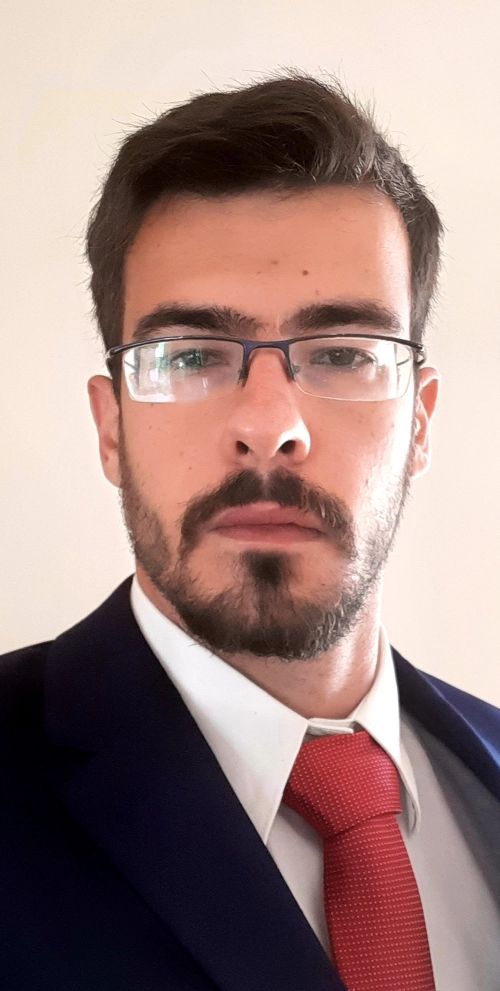
Dr. Vasilis Loukadakis
Dr. Vasilis Loukadakis, graduated from the school of Mining and Metallurgical Engineer of NTUA in 2020 and has a core expertise of (Computational) Applied Physical Metallurgy. In 2024 he successfully defended his Doctoral Dissertation titled “Prediction of the Mechanical Properties of Alloys via Computational Methods”.
He has gained experience on industrial R&D projects, through his position as a researcher at ELKEME S.A. (Department of Physical Metallurgy and Forming). Parallel to his Dissertation he was involved to various European Projects mostly regarding education methods and excellence. Apart from his studies, he has participated in numerous volunteering teams, mainly focused on science communication to the broader public. He has established a volunteering team in Greece, Mi.M.E.C., focused on self-development, providing free webinars to university students about soft skills.
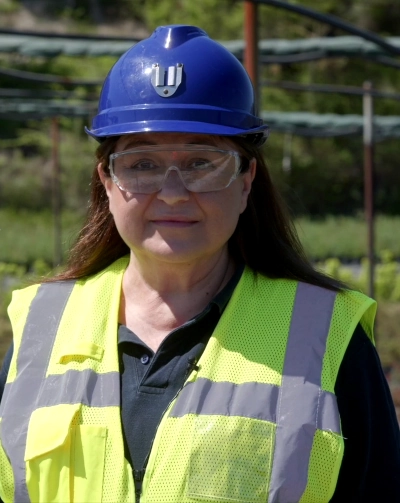
Gazea Emmy
Name: Gazea Emmy
Academic Title: Mining & Metallurgical Engineer, PhD
Institution of employment: Hellas Gold S.A.
Relevant website: hellas-gold.com
Contact number: +30 2376025000
E-mail: emmy.gazea@eldoradogold.com
Chartered Mining and Metallurgical Engineer, National Technical University of Athens (NTUA) with PhD in Environmental Engineering.
Environmental Manager of HELLAS GOLD SA with thirty (30) years’ industrial experience in the environmental management of the mining sector.
Main activities involve design and coordination of integrated environmental monitoring and management plans, extractive waste and liquid effluents management, environmental protection and reclamation projects as well as elaboration of technical and environmental & social impact assessment studies.
Participation in a number of R&D projects with more than 20 publications in international journals and conference proceedings.